
000.422
Clamping Force History Magnet Refills
Download and print this PDF for clamping force history forms. These can be placed on a CNC machine to track a preventive maintenance schedule and measure changes in clamping force over time. Contact us to order free magnetic packets to place the refill forms in.
 PDF Data Sheet: Clamping Force History Magnet Refills (000.422)
For more information regarding this item (Clamping Force History Magnet Refills) or other items, fill out the form below
or contact our office directly:
Telephone: 815-962-5600
Fax: 815-962-4600
Location: 304 North Main St, Suite 104, Rockford, IL 61101-1101 USA
Email: infο@ΤΑCRοckfοrd.cοm
Related
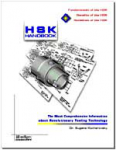
HSK Handbook
The HSK Handbook is recommended for end users involved in the implementation of HSK tooling, machine tool companies and distributors of CNC centers with HSK spindles, tooling departments responsible for HSK specifications, developers of HSK equipment and professionals looking for new tooling solutions for high speed/high rigidity machining.
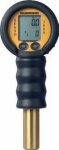
Senso 3000 Hydraulic Tool Holder Force Gauge
The SENSO 3000 is a specialized tool for verifying correct operation of hydraulic tool holders. For workholding collet force gauges, please see our ForceCheck collet force gauges.
SENSO 3000 determines the clamping force of the hydraulic chuck via a pressure sensitive plug gauge. The entire length of the plug gauge is clamped in the hydraulic chuck so that when tightening the clamping screw the clamping pressure of the chuck is optimally applied. The clamping force measuring instrument displays the clamping force as an absolute measurement value on the one hand and as a percentage clamping force in relation to a reference value that can be set individually on the other. This way, SENSO 3000 can be adapted to customer specific application conditions and requirements.
The clamping force measuring instrument is supplied with a plug gauge for the respective clamping diameter as well as a carbide proofing bar for calibration purposes and a CR 2430 type battery – all in a sturdy and handy case.
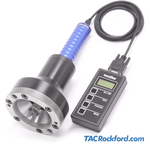
Pallet Holding Force Gauges
Clamping force measuring gauges for pallets are intended to quickly measure the holding force of individual clamping heads.
Pallet clamping adapters are per-application based, and are fitted according to the specifications of the customer's pallet system.
Clamping adapters can be or have been provided for various pallet systems: BERG, Rohm, Mazak, OTT, Schunk, Erowa, and others.
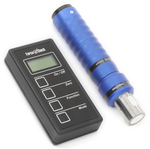
Workholding Collet Drawbar Force Gauge
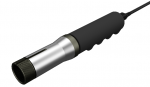
ForceCheck collet force gauges measure the drawbar pullback force of a 5C, 16C, or 20C collet workholding system. Measurement of collet drawbar force provides an easy way to ensure correct force from machine to machine, or between setups for different parts.
Steep Taper Grippers SSKV
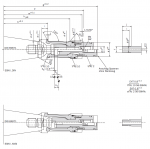
The BERG Spanntechnik SSKV incorporates a number of new technical innovations, including tool holding force intensification and a special tribolic coating to ensure the highest possible constant clamping force.

BERG Pallet Holding Force Gauges
Includes measuring case, display unit, measuring cartridge, test certificate, and clamping head specific pull studs
Hydrodock System
Hydrodock units form the basis of a very compact and flexible clamping system. They were originally conceptualized as for head change systems on large machining centers, but also find applications in diverse areas such as injection molding machines.

Chuck Force Interpretation: Jaw Force vs. Total Gripping Force
The “Total Gripping Force” (F<sub>total</sub>) is defined as the arithmetic sum of the individual radial forces exerted by each jaw.
The force value shown on the ForceCheck display represents the measured radial force of a single jaw (F<sub>jaw</sub>) at the measurement diameter. This is different than the total gripping force of the chuck.
<strong>Calculating Total Gripping Force</strong>
Since the jaws move simultaneously and are driven by the same mechanism (usually a scroll plate or a hydraulic wedge), under ideal conditions the force is distributed equally among them.
F<sub>total</sub> = n × F<sub>jaw</sub>
Where:
-F<sub>total </sub>= Total gripping force
-n = Number of jaws
-F<sub>jaw</sub> = Force measured at a single jaw (value shown on ForceCheck display)
Examples:
3-jaw chuck
-Displayed Force Fjaw = 10 kN
-Total Gripping Force F<sub>total</sub> = 3 × 10 kN = 30 kN
5-jaw chuck
-Displayed force = 10 kN
-Total gripping force = 5 × 10 kN = 50 kN
<strong>Important Distinction: Force vs. Pressure</strong>
It is a common point of confusion whether the forces “cancel out” since they are opposing each other.
-<strong>Net Force on the Part:</strong> The vector sum of forces acting on a properly centered part is 0 kN. This is why the part remains stationary in the chuck.
-<strong>Gripping/Clamping Force:</strong> In terms of holding power and part deformation, we use the sum of the magnitudes. This total force determines how much friction is generated to resist cutting forces and how much the part might “crush” or distort.
<strong>Factors That May Change This Value</strong>
Your “real world” force may differ based on these conditions:
-<strong>Dynamic Loss (Centrifugal Force):</strong> If the chuck is spinning, the jaws want to fly outward due to centrifugal force. This reduces the actual gripping force. At high RPMs, the force when compared to a static condition could drop significantly.
-<strong>Friction and Lubrication:</strong> If you are measuring the force at the sensor but the other jaws are poorly lubricated, they may not actually be producing the same force.
-<strong>Part Geometry:</strong> If the part is not perfectly round or the jaws are not making full contact, the force distribution might become uneven, though the total input force from the chuck mechanism remains the same.

 Submit your feedback